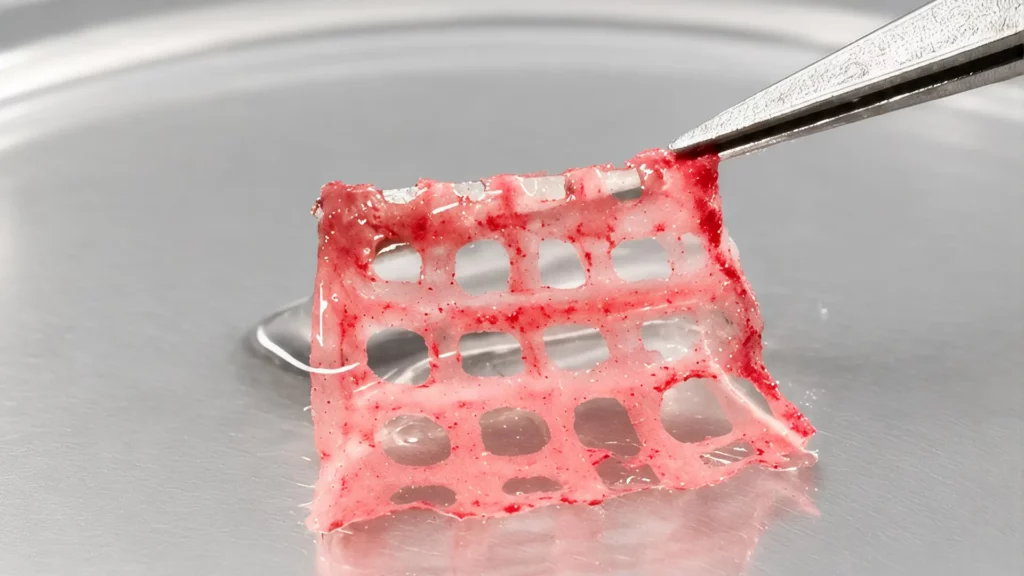
3D bioprinting is one of the most promising innovations in modern biotechnology. It involves using specialized biomedical printers that deposit overlapping layers of biomaterials and living cells (bioinks) to build three-dimensional tissues with micrometer-level precision. Unlike traditional two-dimensional cell cultures (flat plastic laboratory dishes), bioprinted models recreate the architecture, stiffness, and cellular interactions that occur naturally within the human body.
Tailored Cancer Models for Personalized Medicine
Each patient and each tumor has unique characteristics that determine their response to therapies. Using 3D bioprinting, scientists can create three-dimensional models that, thanks to the formulation of biomaterials and tumor cells, mimic the architecture and microenvironment of specific tumors, such as those of the breast, skin, liver, lung, or brain. By incorporating cells extracted from the patient and combining them with stromal cells and extracellular matrix proteins, it is possible to test which drugs or therapeutic combinations will be most effective before administering them to the patient, thereby moving oncology toward a more precise approach.
Accelerating drug discovery and reducing animal testing
Traditionally, the development of a new drug is a slow process with a high failure rate in clinical trials, largely because testing in animal models does not always accurately predict the response in the human body. Automated bioprinting makes it possible to produce hundreds of identical microtumors in multi-well assay plates. This high-throughput screening allows for the rapid, cost-effective, and highly reproducible evaluation of thousands of drug compounds. Furthermore, this technology advances the principle of replacement and reduction of laboratory animals (the 3Rs) by offering biological alternatives based on human cells.
Human Skin Equivalents and Regenerative Medicine
One of the fields seeing the most progress is skin tissue engineering. It is now possible to bioprint multilayer skin structures that incorporate keratinocytes in the epidermis and fibroblasts in the dermis, and even include microvascular channels. These skin analogs are not only used in regenerative medicine for research on the healing of severe wounds and burns, but also as platforms for evaluating dermatological and cosmetic products or testing treatments for skin cancer.
Smart Implants and Targeted Drug Delivery
Beyond laboratory models, bioprinting enables the fabrication of biomedical devices and therapeutic implants. Using bio-inks and biodegradable polymer scaffolds with encapsulated drugs, it is possible to design implants that release chemotherapy continuously and in a targeted manner at the surgical site following tumor removal. This allows effective doses to be delivered directly to the target site, preventing local recurrence and significantly reducing side effects throughout the rest of the body.
Our portfolio of 3D bioprinting solutions
At Flamingo Bio Lab, we are transforming biotechnology innovation for clinical application. We develop tissue models and customized 3D bioprinting solutions that eliminate uncertainty in research and drug trials.
If you’re part of a research team or a healthcare facility and would like to explore how to integrate our technology into your projects, we’d be delighted to discuss how we can collaborate to advance the future of medicine together.