


3D Bioprinting
Our bioprinting models make it possible to visualize the diagnosis and optimize treatment planning
Immersive anatomical exploration
High-fidelity 3D bioprinting
We provide bioprinting solutions for the healthcare sector that streamline processes, enable safer surgical planning, and deliver better care to each patient.
Precise bioprinting models for medicine
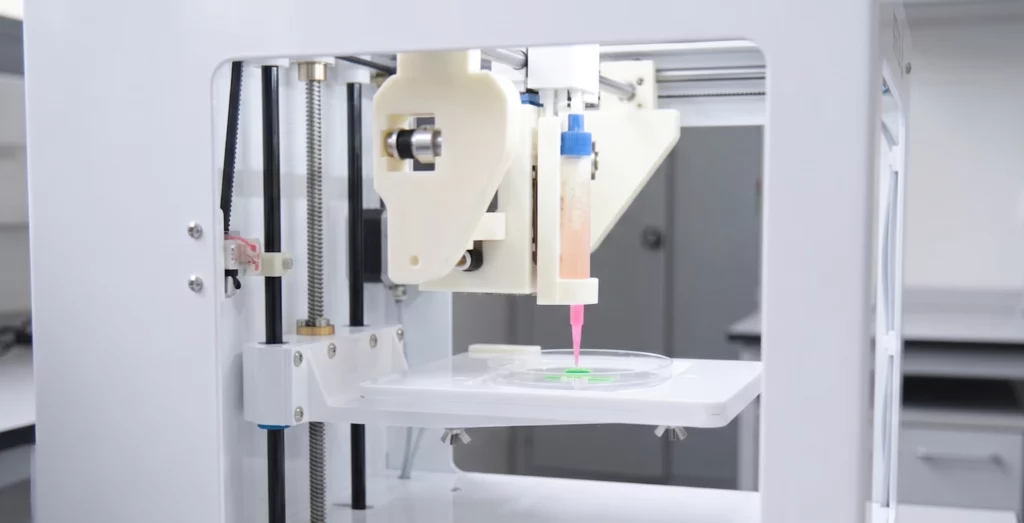
By manufacturing our own equipment using cell-based 3D printing techniques, we are able to replicate specific pathologies with micrometer-level precision, accelerating biomedical research and the study of complex pathologies, and providing tangible models for medical innovation.
Customized consulting on bioprinting
Initial consultation
We evaluate the clinical or research objective and the technical requirements of the model.
Data Management
We ensure that the image files provided are suitable for further processing.
Custom modeling
Our team processes the images to generate an optimized 3D-bioprinted model.
Manufacturing and shipping
We 3D-print the part using specialized materials and deliver it ready for use.
Biomaterials for tissue engineering
Custom Bio-Ink Formulation
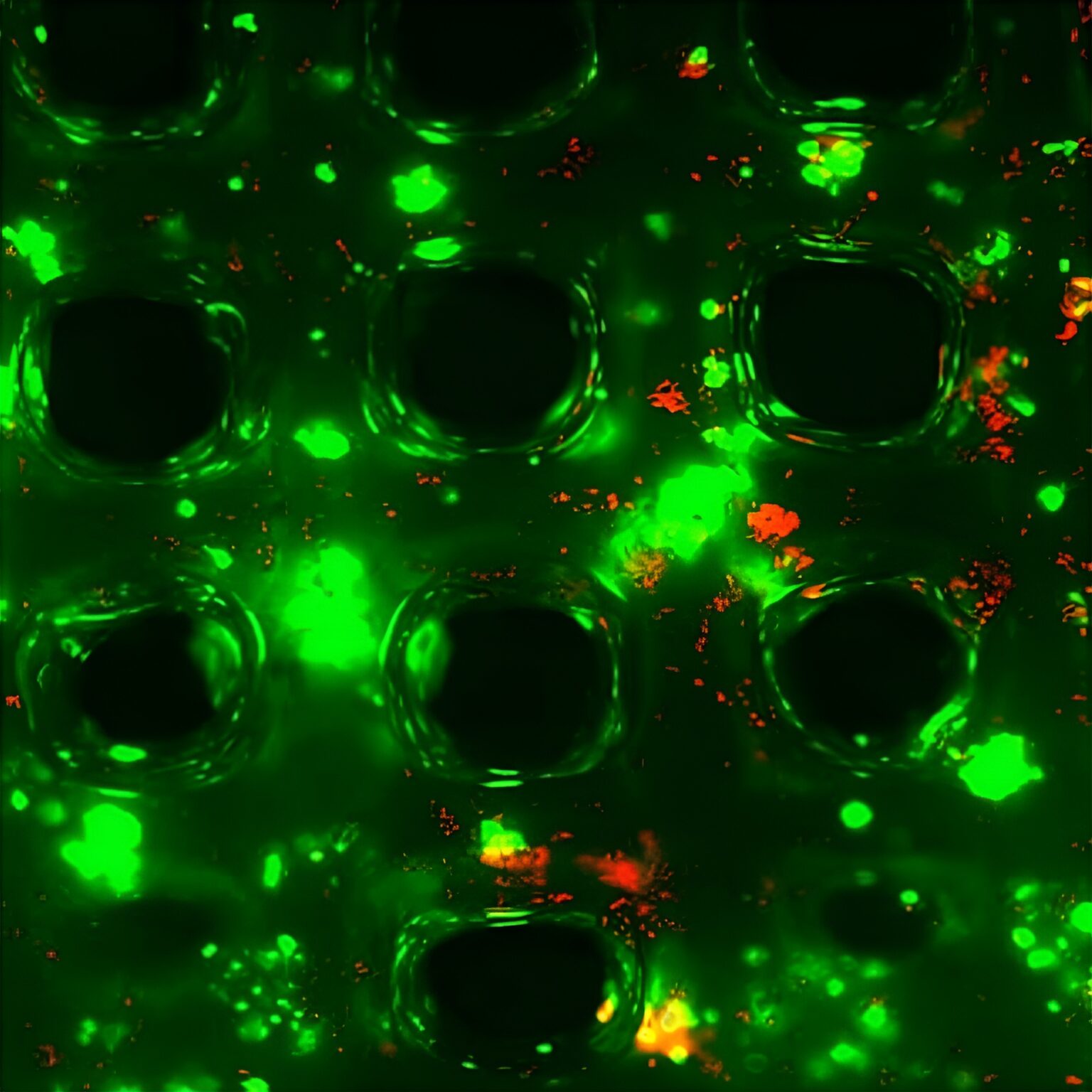
Development and optimization of biomaterials for efficient cell encapsulation, ensuring cell viability and structural integrity during deposition. This enables us to create a range of cells that allow us to replicate multiple tissues and pathologies.
- Cell viability
- Rheological control
- Customization of the microenvironment
Tissue engineering focused on anatomical replication
Microstructural Mimicry
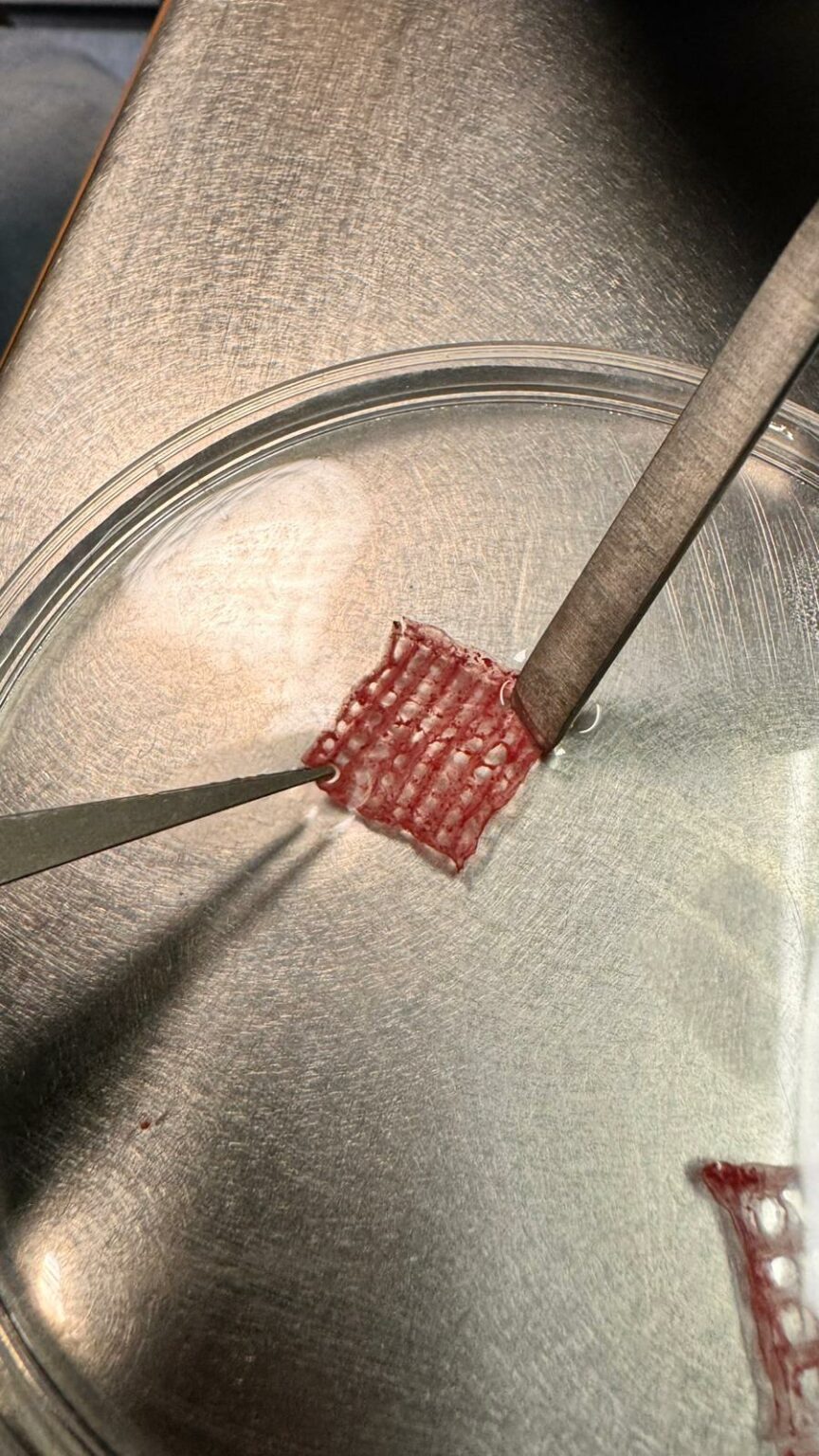
Automated layer-by-layer deposition capability to precisely replicate the porosity, internal vascular channels, and mechanical properties of soft tissues and specific pathologies. By using our equipment, we enable this combination of tissues that closely mimics human capabilities.
- Tissue survival
- Flow dynamics
- Structural adaptation
Benefits of 3D bioprinting in the field of medicine
Enables the creation of exact biological replicas at the cellular level, providing a hyper-realistic and customized environment for the risk-free study of complex pathologies.
Optimizes research and clinical trial phases by drastically reducing the time required to validate new treatments and drug compounds.
Facilitates the design and automated fabrication of custom cellular structures, paving the way for real-world solutions in advanced regenerative medicine.
Ready to lead the next generation of surgery?
Optimize your processes, reduce risks, and discover the best personalized medicine solutions for patient well-being.
Frequently Asked Questions
Our technology enables the creation of anatomical biomodels based on imaging tests (CT/MRI), customized surgical guides, prototyping of medical instruments, and the manufacture of orthoses or prostheses tailored to the specific anatomy of each patient, whether human or animal.
Life-size biomodels allow surgeons to visualize and palpate the pathology before entering the operating room. This facilitates the simulation of surgical approaches, reduces anesthesia and procedure times, and improves communication with the patient or the animal’s owner by providing a tangible explanation of the procedure.
We use high-resolution technologies that allow us to reproduce bone structures and soft tissues with millimeter-level accuracy. In the healthcare sector, we ensure that the distances and volumes of the digital model are transferred to the physical model with minimal tolerances, which are essential for the proper fit of implants or cutting guides.
We are equipped to handle both rapid prototyping of individual units and the production of short and medium runs. 3D printing is a cost-effective alternative to plastic injection molding for production runs where the cost of the mold cannot be recouped or where a high degree of customization is required.
We offer a range of specialized resins and technical polymers. Depending on the project’s requirements, we can use materials with biocompatibility certification (for limited contact with skin or mucous membranes) and heat-resistant materials that withstand autoclave sterilization, ensuring their safety in clinical settings.
The main advantage is flexibility and geometric freedom. We can create lightweight internal structures or articulated parts in a single print that would be impossible to machine. Furthermore, it allows for immediate design iterations: if a part doesn’t fit, the digital file is modified and the part is printed again without the need to change physical tools or dies.