


Surgical simulators
Our simulators replicate the physical and mechanical properties of the skin, organs, and internal structures
High-fidelity simulators for training
Surgical simulators and medical training
Our surgical simulators enable specialists to develop technical skills in controlled environments, shortening the learning curve and improving patient safety.
Medical simulation of preoperative assessment
Our surgical simulators replicate the physical properties of the skin, organs, and internal structures. These models allow specialists to practice suturing maneuvers and techniques that behave like real tissue, facilitating mastery through practice and surgical realism.
- Steep learning curve
- Anticipating critical scenarios
- Muscle memory and haptic immersion
- Access to rare and complex cases
- Reducing surgical stress
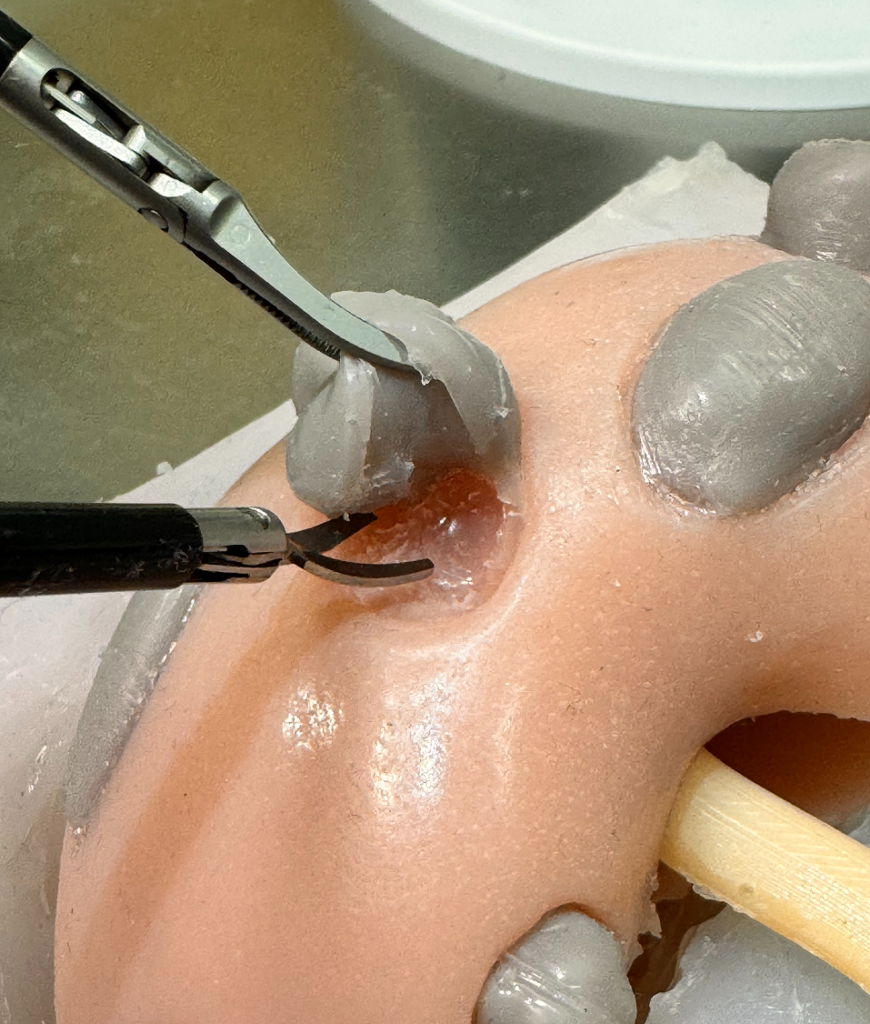
Simulator properties
Configurable elasticity
We adjust the mechanical behavior of each tissue to replicate the specific deformation and recovery exhibited by the actual organ under surgical tension.
Hardness 50A–00
We adjust the indentation resistance within a precise range, allowing us to distinguish between soft, delicate fabrics and structures with greater density and firmness.
Hydrogel formulation
We develop water-based polymers that replicate the viscosity, moisture content, and shear response of biological tissue, ensuring a dissection experience that closely mirrors clinical reality.
Available materials
- Silicones
- Resins
- Latex
- Polyvinyl
- Ballistic gel
- Photopolymers
Ready to lead the next generation of surgery?
Optimize your processes, reduce risks, and discover the best personalized medicine solutions for patient well-being.
Frequently Asked Questions
Surgical simulators allow specialists to refine their techniques for incision, dissection, and suturing in a safe environment. By using materials that replicate the mechanical response of tissues, surgeons gain precision and reduce stress during complex procedures.
Yes. We develop surgical simulators tailored to the anatomy and specific needs of each case. We can adjust the tissue settings to recreate specific pathological conditions, allowing surgeons to practice the surgical approach before the actual operation.
Our medical-grade hydrogel and silicone formulations are designed to withstand rigorous use. The materials retain their physical properties and tactile response after multiple incisions and sutures, ensuring consistent performance during training sessions.
While other methods are limited to visualization, our surgical simulators prioritize haptic feedback. The surgeon not only observes but also feels the organ’s actual resistance and elasticity, which accelerates the development of the muscle memory needed in the operating room.