Precision medicine is no longer a future projection. Among the technologies transforming current clinical practice, digital twins in healthcare stand out as one of the most disruptive tools today. By transferring the concept of digital twins from the industrial sector to the human body, biomedicine has found an unprecedented way to optimize diagnostics, test therapies, and plan complex interventions with minimal risk.
What is a digital twin in the medical field?
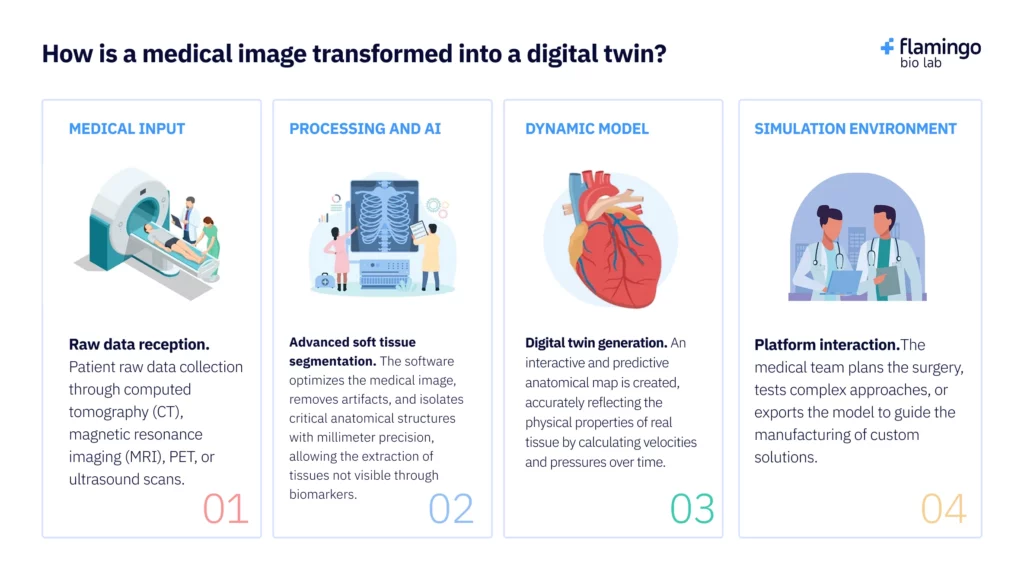
A digital twin is a dynamic virtual model that accurately reproduces the anatomical and physiological characteristics of an organ, a tissue, or the entire system of a specific patient. It is not a static three-dimensional image, but a structure continuously updated by biological and radiological data. Unlike other generic models, these virtual clones are built from real patient information: computed tomography scans, magnetic resonance imaging, and specific biomarkers. The result is an interactive and predictive map that reacts to simulated stimuli and treatments in the exact same way that real tissue would.
Clinical applications of digital twins in healthcare
The integration of these virtual models into hospital routines brings significant advantages in three main areas:
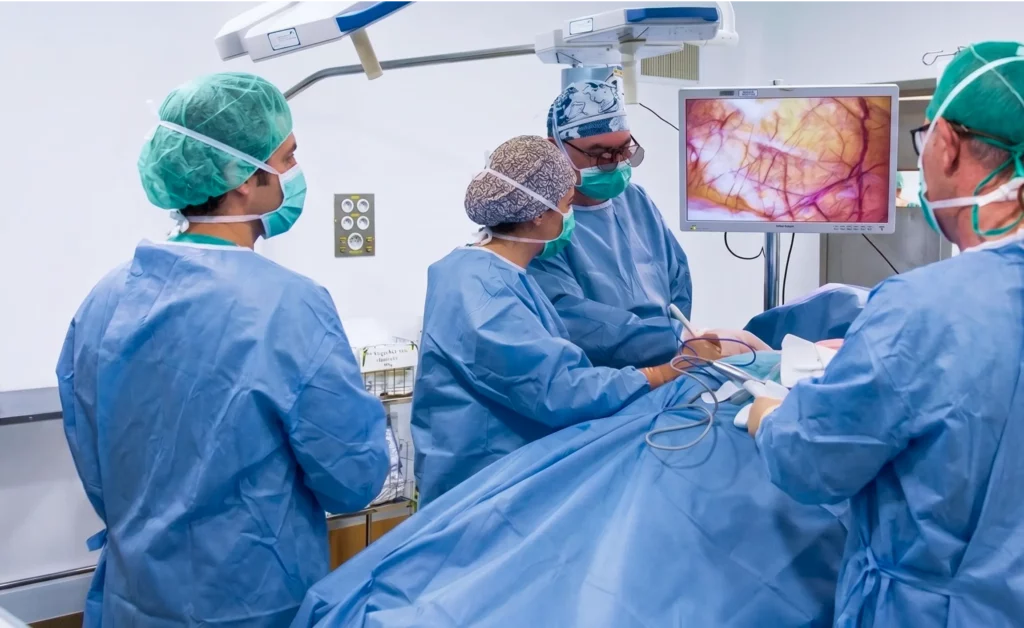
- Surgical planning: Before performing surgery, medical teams can distinguish between different tissues to approach the intervention more efficiently. This reduces the risk of complications through a better understanding of the physiology and significantly decreases time spent in the operating room.
- Treatment simulation: Digital twins allow teams to test the efficacy of a drug or the response of soft tissue to an intervention before treating the patient, eliminating trial and error.
- Bioprinting: Beyond surgical planning or simulation, bioprinting is a fundamental pillar for clinical application. Through this technology, we can replicate pathologies with a high degree of accuracy, accelerating biomedical research and the study of complex diseases, while providing tangible models for medical innovation. The combination of digital twins with additive manufacturing techniques opens the door to designing bioinks and cellular structures tailored with millimeter precision to the patient’s actual cavity.
The future of planning: Nexus platform
The technology that allows the transformation of radiological data into interactive 3D virtual clones is about to become a daily part of surgical interventions.
Currently, Nexus is in its public demonstration phase. Specialists can request early access to evaluate the capabilities of the virtual environment. The technical team will analyze the requests to assess the viability and fit of the project within the simulation tests being carried out.
You can request the evaluation of your case and access to the demonstration version by filling out the contact form.